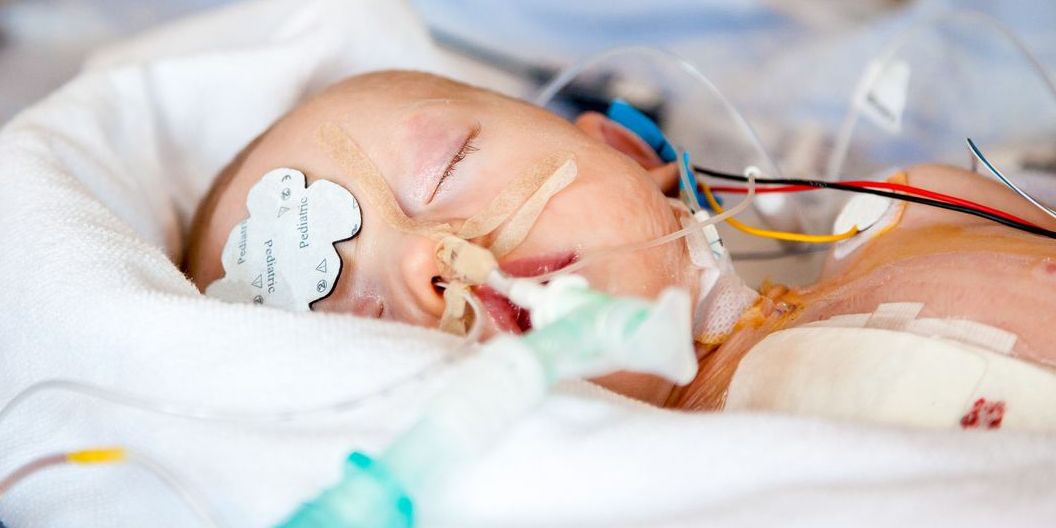
Among young children with acute respiratory failure who received more than one week of pediatric ICU (PICU) sedation, the estimated IQ score of those managed with an opioid- and benzodiazepine-only strategy was 4.1 points lower compared with those whose treatment included dexmedetomidine, according to findings from a multicenter prospective cohort study published in JAMA Network Open.
“For a long time, we haven’t had clear evidence on which sedatives are best for critically ill children on ventilators,” said corresponding study author Martha A. Q. Curley, RN, PhD, of the University of Pennsylvania School of Nursing, in a news release. “Our study shows that the choice we make in the pediatric ICU [PICU] can affect a child’s brain development years later. Specifically, adding dexmedetomidine to our treatment plan may help protect a child’s long-term thinking and learning skills better than using opioids and benzodiazepines alone.”
Findings Suggest Dexmedetomidine May Offer Protective Benefit
To evaluate whether sedative choice during early‑childhood critical illness affects long‑term neurocognitive outcomes, the researchers assessed 256 children involved in the Randomized Evaluation of Sedation Titration for Respiratory Failure (RESTORE) cluster-randomized clinical trial, aged 8 years or younger at RESTORE enrollment. Participants underwent neurocognitive testing at regional neuropsychology testing centers 3 to 8 years after hospitalization.
The research team defined the primary outcome as IQ, estimated using the age-appropriate Vocabulary and Block Design subtests of the Wechsler Intelligence Scale, and assessed drug- and dose-dependent associations between sedatives and neurocognitive function, adjusting for baseline factors, severity, and the course of critical illness.
“Among 243 children with data, 228 children (93.8%) had age-appropriate global assessment of cognitive function (Pediatric Cognitive Performance Category=1) at testing,” the researchers reported. “Children were exposed to a median (IQR) of 8 (5 to 14) days of continuous sedation at a median (IQR) age of 1.0 (0.2 to 3.2) years. The mean (SD) estimated IQ was 100.3 (13.2), similar to the published test mean of 100.”
The authors noted that although participants’ estimated IQs were comparable to population norms, they showed lower performance across multiple cognitive domains relevant to academic skills, play and development, emotional well‑being, interpersonal functioning, and daily activities.
Notably, findings revealed that at long‑term follow‑up, the participants’ mean (SD) estimated IQ differed by sedation strategy as follows:
- Múltiples clases de sedantes, incluida la dexmedetomidina: 101,9 [13,5]
- Múltiples clases de sedantes que no incluyen dexmedetomidina: 100,6 [14,5]
- Sólo opioides y benzodiacepinas: 98,3 [11,8]
“El CI estimado fue 4,1 puntos más bajo en niños que recibieron una estrategia de opioides y benzodiacepinas únicamente en comparación con aquellos que recibieron una estrategia que incluía dexmedetomidina cuando se controla por estatus socioeconómico, gravedad de la enfermedad al ingreso y la duración de la ventilación mecánica,” enfatizaron los investigadores. “Coherente con estudios preclínicos, sospechamos que la dexmedetomidina podría ser protectora, especialmente en la cohorte más joven. Sin embargo, no podemos determinar causalidad en este estudio observacional.”
No obstante, los investigadores destacaron su estudio como “el primer y más grande estudio en persona, multisede, de un seguimiento de niños evaluados con una función cognitiva global acorde a su edad que experimentaron una enfermedad crítica a edad temprana,” y concluyeron, “En los niños, la estrategia de sedación utilizada para apoyar la gestión de cuidados intensivos ante la insuficiencia respiratoria aguda puede estar asociada a resultados neurocognitivos a largo plazo. Las investigaciones futuras deberían incorporar estos hallazgos en un ensayo aleatorizado prospectivo.”
Referencias
Curley MAQ, et al.. JAMA Netw Open. 2026;9(5):e2613599. Publicado en línea el 1 de mayo de 2026. doi:10.1001/jamanetworkopen.2026.13599
Penn Nursing. Consultado el 11 de junio de 2026. https://www.nursing.upenn.edu/live/news/3650-sedative-choice-in-pediatric-intensive-care-may